
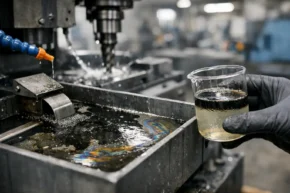
Coolant tramp oil rarely announces itself with a single dramatic failure. It usually appears as a surface sheen, a persistent odor, unstable foam, or coolant that no longer performs as it did when the sump was fresh. Left unmanaged, this contamination can reduce tool life, compromise part quality, increase fluid consumption, and create unnecessary maintenance work. NuCool represent a high quality reasonably priced semi-synthetic coolant that is practically maintenance free. Just simply keep concentration within the desired range and enjoy a coolant that will not go rancid, rust machine surfaces or have unbearable odors.
For metalworking operations, tramp oil control is not simply a housekeeping task. It is a fluid-management requirement that directly affects machining consistency, equipment condition, operator acceptance, and the useful life of cutting and grinding fluids.
A certain amount of contamination is common in machine shops. The concern is not whether any tramp oil exists, but whether the amount, source, and rate of accumulation are exceeding the coolant system’s ability to maintain stable performance.
The most common sources include hydraulic fluid leaks, way lubricant carryover, spindle and gearbox leaks, chuck and collet lubrication, and residual oils carried into the machine on incoming material or parts. In multi-operation production lines, rust preventatives, drawing compounds, stamping lubricants, and wash-process carryover can also enter the coolant.
Some oils are more disruptive than others. A light way oil may form a manageable surface layer, while a heavily treated hydraulic oil or incompatible process oil can destabilize the emulsion, promote foam, or interfere with corrosion protection. The coolant chemistry, water quality, machining application, and contaminant load all influence the outcome.
The surface layer created by tramp oil restricts the coolant’s contact with air. That may sound beneficial at first, but it can reduce oxygen transfer enough to favor anaerobic bacterial activity. The result for traditional coolants often foul odor, accelerated fluid degradation, and a greater need for biocide treatment or partial sump replacement. NuCool overcomes these obstacles and keeps on performing even when the machine is neglected.
With traditional coolants tramp oil can also interfere with the coolant’s designed lubricity, wetting, and cooling behavior. NuCool’s performance is not disrupted when foreign oils dilute system, therefore tool wear, surface finish, chip evacuation, foam control, and corrosion resistance are not comprised.
For grinding operations, contamination can be particularly problematic. Oil can load filters, reduce coolant cleanliness, affect wheel performance, and contribute to inconsistent finish requirements. In machining centers, excessive oil may cause misting, residue buildup, or slippery machine surfaces. It can also produce deposits on parts that complicate downstream washing, coating, welding, or assembly.
There is a cost issue as well. When a sump turns over prematurely because of odor, instability, corrosion, or visible contamination, the expense includes more than replacement fluid. Production time is consumed by draining, cleaning, recharging, and bringing the system back to operating concentration. Disposal costs and lost machining time add to the total impact.
How to Identify the Source of Tramp Oil
Removing surface oil without correcting its source only treats the symptom. Effective control begins with a practical inspection of the machine, the coolant system, and the parts entering the process.
Start by observing where the oil appears. A localized buildup near a way cover, hydraulic cylinder, spindle, or chuck can point to a machine leak. Oil that increases after a particular incoming job may indicate carryover from a prior operation. When contamination is widespread across a central system, review all contributing machines and any processes upstream of coolant collection.
A simple surface inspection is useful, but it should be supported by regular fluid checks. Track coolant concentration, pH, odor, appearance, foam, and visible oil layer thickness. A sudden change in any one measure can help maintenance and process personnel identify whether the issue is mechanical leakage, excessive carryover, poor skimming, or a coolant condition that requires adjustment.
It also helps to distinguish free oil from an unstable emulsion. Free tramp oil can usually be removed mechanically from the surface. If the coolant itself has become milky, split, excessively oily, or prone to residue, the issue may involve contamination compatibility or a loss of fluid stability. That condition may require technical review rather than simply increasing skimmer run time.
Controlling Coolant Tramp Oil in Daily Operation
The right control method depends on sump size, contaminant volume, machine configuration, and production schedule. Small machine sumps may benefit from a belt skimmer or absorbent collection device. Larger systems may require a disk skimmer, coalescer, decanting arrangement, or dedicated coolant-management equipment.
Skimming works best when the machine is idle or when coolant circulation allows oil to rise and collect in a quiet area. If oil is constantly mixed back into the fluid by pumps, turbulence, or return flow, separation becomes less efficient. Establishing a calm collection zone can improve removal without changing the coolant formulation.
Mechanical repairs remain essential. A skimmer is not a substitute for repairing a leaking hydraulic fitting, worn way wiper, failed seal, or over-lubricated component. Where machine repairs cannot be completed immediately, increase monitoring and removal frequency to prevent the contaminant load from overwhelming the sump.
Good coolant concentration control is equally important. Running below the recommended concentration can weaken corrosion protection and biological resistance. Running too high can increase residue, operator concerns, and operating cost. Use a refractometer and apply the product-specific correction factor where required. Do not assume that an oil-contaminated refractometer reading represents coolant concentration accurately without verifying the condition of the sample.
For facilities with multiple fluids in use, process discipline matters. Keep way lubricants, hydraulic oils, rust preventatives, and other production oils clearly identified. Avoid introducing incompatible products into the coolant system through top-off containers, maintenance practices, or improperly cleaned transfer equipment. Segregation reduces the chance that a minor leak becomes a chemistry problem.
A Preventive Maintenance Program That Holds Up
A dependable tramp-oil program combines routine machine maintenance with fluid-management discipline. The most effective programs assign clear ownership for checking sump condition, operating separation equipment, recording fluid measurements, and escalating abnormal results.
At a minimum, maintenance personnel should inspect machines for active oil leaks during scheduled service. Operators should have a simple standard for reporting surface oil, unusual odor, excess foam, residue, or changes in machining performance. Coolant management personnel should review trends instead of relying only on visual inspection during a problem event.
Consider a regular schedule for surface-oil removal, especially on machines that sit idle overnight or over weekends. This timing often gives free oil the opportunity to separate from the coolant. The collected material should be handled according to the facility’s waste-management procedures, since the removed oil can contain coolant, fines, and other process contaminants.
System cleanliness also affects results. Chips, fines, sludge, and debris create areas where bacteria can grow and can make separation equipment less effective. Clean filters, maintain return-line flow, remove settled solids, and keep machine sumps from becoming long-term collection points for mixed contaminants.
When contamination persists despite sound maintenance practices, review the coolant selection itself. A metalworking fluid must match the workpiece material, machining severity, water quality, machine design, and downstream requirements. Nutech Company can support this review with application-specific fluid knowledge and technical service focused on performance, stability, and operating value.
When Skimming Is Not Enough
There is a point at which routine tramp oil removal cannot restore the coolant system. Warning signs include persistent rancid odor, recurring foam, corrosion on machines or parts, major emulsion instability, excessive residue, repeated microbial treatment, and performance changes that do not respond to normal concentration adjustment.
In those cases, evaluate the full system condition. A partial decant and recharge may be sufficient if the coolant remains stable and contamination is limited. If the sump contains heavy sludge, severe biological growth, incompatible oil, or long-term degraded fluid, a complete system cleanout and recharge may be the more reliable decision.
The trade-off is production interruption versus continued risk. Extending a failed coolant system can consume more time through tool failures, quality issues, cleanup, and operator complaints than a planned corrective maintenance event. The right decision is based on fluid condition and process impact, not only on how much coolant remains in the tank.
A controlled coolant system protects far more than the sump. It supports predictable machining, cleaner equipment, reliable part quality, and a maintenance program that addresses contamination before it becomes a production problem.