
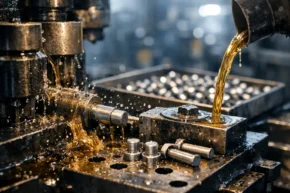
A cold header can produce thousands of fasteners per hour, but the lubricant often determines whether that output remains stable through the shift. Nutech cold heading oils control friction and metal pickup under severe unit pressures while still allowing parts to release cleanly from the die. When lubrication is poorly matched to the process, the result is rarely limited to one defective part. Die wear, galling, inconsistent dimensions, surface damage, and unplanned cleanup can quickly affect throughput and manufacturing cost.
For manufacturers producing bolts, screws, rivets, pins, studs, and other headed parts, lubricant selection should be treated as a process decision rather than a commodity purchase. The correct formulation depends on the workpiece material, reduction severity, tooling condition, machine design, application method, and downstream requirements.
What Cold Heading Oils Must Do
Cold heading is a high-pressure metal-forming operation. Wire or rod stock is cut to length and then upset, extruded, or formed into a finished shape without heating the material to forging temperature. The process places substantial stress on both the workpiece and the tooling, particularly where material flows rapidly across die radii, punches, and extrusion features.
Cold heading oils form a lubricating film between the metal and tool surfaces. That film reduces friction, limits adhesive wear, and helps prevent metal from welding to the die or punch. A capable lubricant also supports more consistent material flow, which can improve head fill, dimensional repeatability, and surface quality.
The required performance is more complex than simply choosing a heavier oil. Viscosity contributes to film strength and carryoff, but extreme-pressure chemistry, polarity, boundary lubrication properties, and application consistency are equally important. A product that performs well on a simple upset may not provide sufficient protection during a severe forward extrusion or multi-station forming sequence.
Key Properties to Evaluate in Cold Heading Oils
A cold heading lubricant should be evaluated against the actual forming load and production conditions, not selected solely by product appearance or viscosity grade. The most useful properties are those that affect tool protection, part quality, housekeeping, and downstream compatibility.
Film Strength and Extreme-Pressure Performance
At high contact pressures, the lubricant film can become very thin. Boundary lubricity and extreme-pressure additives become critical at that point. These components help prevent direct metal-to-metal contact, reducing galling, scoring, and localized heat generation.
The right additive package depends on the metal being formed and the severity of the operation. Carbon steel, alloy steel, stainless steel, aluminum, and specialty alloys each respond differently to lubricant chemistry. A formulation that provides dependable protection on low-carbon steel may create staining, residue, or cleaning concerns on another material. Compatibility testing is especially valuable when changing alloys, coatings, or conversion-coated wire.
Viscosity and Application Control
Viscosity affects how effectively the lubricant coats incoming wire or blanks and how well it remains in the forming zone. Lower-viscosity products may improve delivery through certain spray, drip, or recirculating systems. Higher-viscosity oils can provide stronger cling and may be appropriate for demanding operations where lubricant retention is a concern.
There is a trade-off. An oil that is too light can be displaced before the most severe forming step. An oil that is too heavy may lead to excessive drag, poor delivery, misting issues, residue accumulation, or unnecessary lubricant consumption. Machine speed, tool temperature, and the location of lubricant application all influence the appropriate viscosity range.
Metal Cleanliness and Downstream Processing
Cold-formed parts frequently move into washing, heat treatment, plating, phosphate coating, painting, or rust-prevention operations. Lubricant residue that is difficult to remove can interfere with these downstream stages and create avoidable rework.
A practical selection process considers the full production route. If parts will be plated or coated, the heading oil should be compatible with the plant’s cleaning system and supported by trials that evaluate surface cleanliness after washing. If parts are heat treated, the amount and type of residual oil should be reviewed for potential smoke, carbon residue, or furnace cleanliness concerns.
Tool and Material Compatibility
Tool steels, carbide inserts, coated tools, and specialized die materials can have different lubrication requirements. The same is true of wire stock condition. Surface phosphate, lime, polymer, soap, or other carrier coatings may work with the heading oil as part of a combined lubrication system.
In many applications, the wire coating carries much of the lubricant into the deformation zone while the oil provides additional boundary protection and machine lubrication. Changing either component without evaluating the other can disturb a process that previously operated reliably. The most effective approach considers wire preparation, lubricant chemistry, and die design as connected variables.
Matching the Oil to the Forming Operation
Not every cold heading operation has the same lubrication demand. Simple heading of low-carbon steel fasteners may require a different product than a multi-blow part with extrusion, recess forming, or complex geometry. Forming severity rises with greater area reduction, sharper radii, higher-strength materials, tighter tolerances, and longer tool contact.
Production engineers should begin by identifying the point at which the operation is most demanding. That may be the initial upset, a forward extrusion, a flange-forming station, or a final trim. Tooling failure patterns are useful evidence. Galling on a punch, metal pickup in an extrusion die, scuffing near a head radius, and short tool life can each indicate that the lubricant film is failing in a specific stage.
A lubricant supplier should be able to recommend candidate formulations based on part geometry, wire diameter, material grade, machine speed, station count, current lubricant, application method, and downstream cleaning requirements. Plant trials should be controlled closely enough to compare die life, press stability, part surface condition, lubricant use, and cleanup demands rather than relying only on short-term production results.
Common Problems That Point to Lubrication Gaps
When a cold header begins producing inconsistent results, lubricant performance is one possible cause, but it should not be assumed to be the only cause. Wire chemistry, surface treatment, die alignment, tool finish, setup condition, and equipment maintenance can create similar symptoms. Still, several conditions warrant a focused review of the oil and its delivery system.
Galling and metal pickup often indicate inadequate boundary protection, an incompatible additive package, insufficient lubricant coverage, or damaged tooling. Excessive die wear may point to insufficient film strength, though poor alignment or abrasive contamination should also be investigated. Surface scratches or scuffing can result from lubricant starvation, contaminated oil, rough tooling, or problems with incoming wire condition.
Inconsistent lubricant application is a frequent and avoidable issue. Plugged nozzles, poor spray patterns, incorrect flow settings, low reservoir levels, and contamination can leave some stations under-lubricated while others receive excessive oil. A product cannot perform to its design capability if it is not reaching the critical contact area consistently.
Residue buildup on equipment may require a different balance of viscosity, lubricity, and cleanliness. However, reducing oil quantity without confirming film protection can shorten tool life. The goal is not the lowest possible oil use. It is the lowest total operating cost, including lubricant consumption, tooling expense, scrap, labor, cleaning, and lost production time.
Managing Cold Heading Lubricant Performance
Fluid management supports stable results after the correct oil is selected. Keep reservoirs and delivery systems clean, monitor for tramp contamination, and verify that application equipment is functioning at every station. When recirculating systems are used, filtration and routine inspection help reduce the risk of particulate contamination reaching dies and punches.
Documenting lubricant additions, machine settings, tool life, defect rates, and unusual operating conditions creates a useful baseline. That information makes it easier to identify whether a change in performance is related to lubricant condition, incoming material, tooling, or equipment. It also provides a more reliable basis for evaluating product changes.
Nutech Company, LLC works with manufacturers that need cold heading lubricants aligned with demanding production requirements and related metalworking processes. Application-specific evaluation can help identify the chemistry and operating controls needed to protect tooling, support part quality, and maintain dependable output.
The best cold heading oil is the one that performs consistently at the most severe point of the operation while fitting the rest of the manufacturing route. When lubricant selection is tied to tooling, wire condition, application control, and downstream processing, it becomes a practical lever for longer die life and more predictable production.